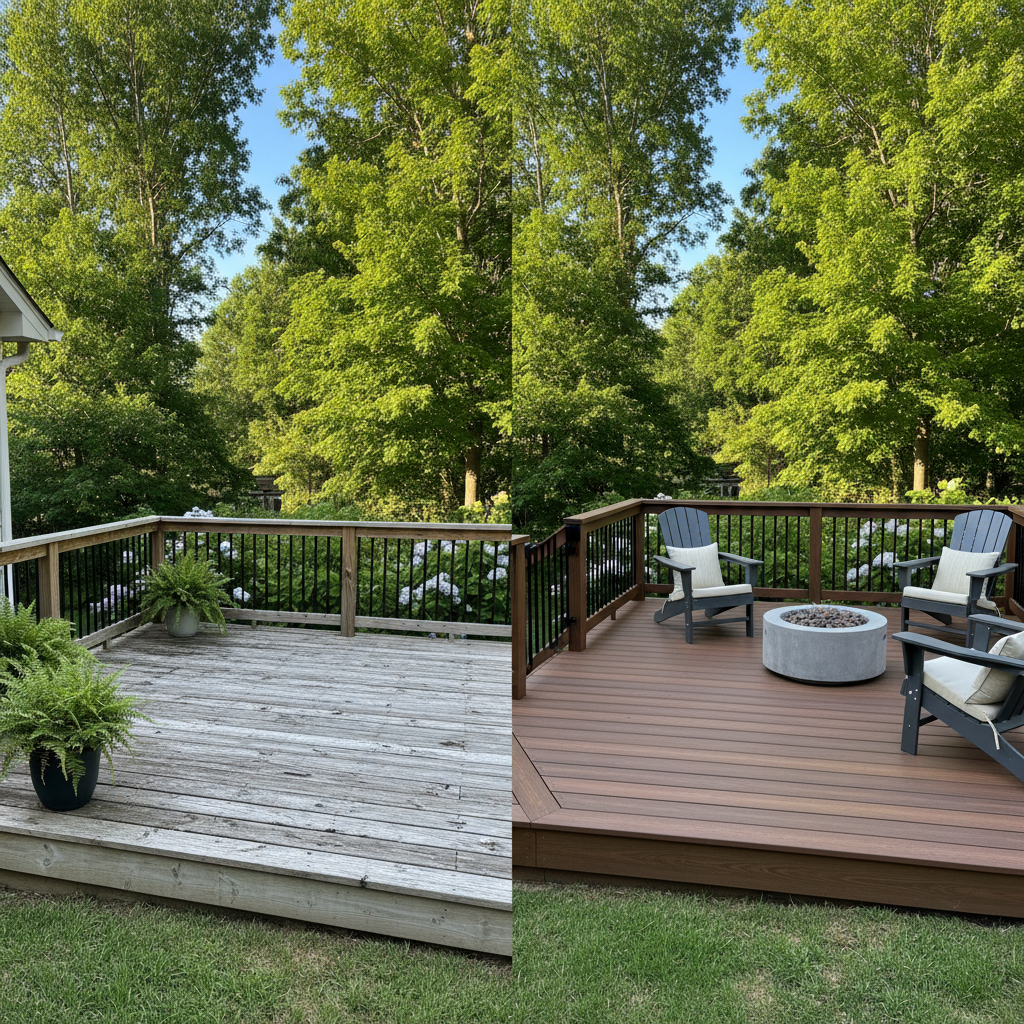
Alright, let's talk decks. Composite ones, specifically. I've been building them all over Clio for years, from those cozy backyards near the old cotton mill to the bigger places out towards the lake. And you know, one question keeps popping up, doesn't it? What's the real deal with the different types of composite? You've probably heard 'capped' and 'uncapped' tossed around. It sounds a bit technical, sure, but trust me, knowing the difference is super important for any homeowner here in Alabama.
See, when composite decking first came out, it was a real game-changer compared to wood. Fewer splinters, no rotting, way less maintenance. But those early versions, what we now call 'uncapped' composite, had their downsides. Then came 'capped' composite, and that really stepped things up. So, let's dive into what these two actually mean for your backyard project.
What's the Story with Uncapped Composite?
Think of uncapped composite as the original recipe, if you will. It's basically a mix of wood fibers and plastic, pressed together to make a board. It was a big improvement over wood because it does a pretty good job resisting rot and insects.
- Cost: Generally, uncapped composite will be your cheaper option right off the bat. Manufacturers save a bit by skipping that extra protective layer, and that saving gets passed right to you. If your budget's tight, it might look appealing.
- Appearance: These boards often have a more natural, wood-like look because the wood fibers are exposed. They can look quite nice when they're first put in.
- Durability & Maintenance: Here's where we run into some snags, especially with our Alabama humidity and intense sun. Without that outer shell, the wood fibers inside are exposed. That means they're much more likely to suffer from things like UV damage, fading, staining, mold, and mildew. You'll notice they fade to a lighter color over time, just like wood. And you'll have to clean them more often to keep mold and algae from taking hold. They also tend to soak up moisture more easily, which can lead to swelling, cupping, and cracking down the road.
Now for Capped Composite Decking
Capped composite is the next generation of that original idea. It still has that same core of wood fibers and plastic, but it's wrapped in a super durable, protective polymer shell. Imagine a candy-coated chocolate – tough on the outside, good stuff inside. This cap gets bonded right to the core during manufacturing, making a smooth, protective barrier.
- Cost: You're definitely going to pay more for capped composite upfront. That extra layer of protection and the whole manufacturing process add to the price tag. But I always tell folks in Clio that even though the initial cost is higher, you'll save money in the long run on maintenance and avoiding potential replacements.
- Appearance: This is where capped composite truly shines, in my opinion. The cap allows for a huge range of colors, textures, and finishes, often mimicking natural wood grains beautifully. Plus, that cap is designed to resist fading and staining, so your deck keeps its color and looks great for years.
- Durability & Maintenance: This is the big win for capped composite, especially for us here in Alabama. That protective cap acts like a shield. It makes the boards highly resistant to fading, staining, scratching, and mold. It stops moisture from getting into the wood fibers, which means less worrying about warping, rotting, or insect damage. You won't need to seal or stain it, and usually, just a good cleaning with soap and water is all it takes to keep it looking fantastic.
Now, even within capped composite, there's another distinction: 3-sided versus 4-sided capping. Most capped boards protect the top and sides. But some, like certain TimberTech products, are capped on all four sides. A 4-sided cap gives you complete encapsulation, protecting even the grooves and the underside. This offers maximum durability and protection from moisture, UV, and insects. If you're cutting a lot of boards or if the underside is exposed, that 4-sided cap really makes a difference.
My Recommendation for Clio, AL Homeowners
Considering our climate here in Clio – those hot, humid summers, the heavy rainfall we get, and all that moisture that just hangs in the air – my clear recommendation is capped composite decking.
Uncapped composite just doesn't hold up as well to the elements we constantly battle. You'll see more fading, more mold, and a lot more potential for issues like swelling and cracking over time. You'll spend more time cleaning and worrying about it, and frankly, that defeats a lot of the purpose of choosing composite in the first place, doesn't it?
Capped composite, on the other hand, is built for this. It's engineered to resist the very things our Alabama weather throws at it. It'll keep its looks longer, need less of your precious weekend time for upkeep, and ultimately give you a much better return on your investment. Brands like Trex, Envision, MoistureShield, and Sylvanix all offer excellent capped options that are proven performers in humid environments.
You want a deck that's going to look good for family gatherings, stand up to the kids running around, and not become a chore. You want to be enjoying your sweet tea on it, not scrubbing mildew off it. That's why, for most folks in Clio, capped composite is the smart choice. It's a little more upfront, but it's a whole lot less headache down the line. We at Paradise Deck Solutions can walk you through the options, show you samples, and help you pick the perfect capped composite for your home.